I’m no longer the same after the eclipse
I grew up in a family that looked at the stars, admired them, and tried to understand them. From a very young age, I knew how to spot satellites, tell planets apart from stars, and locate the constellations Orion and Scorpius, which we fondly called “the Hat constellation.” I still remember the time the TV announced that an eclipse would be visible from our little town: I started counting down the days. My grandfather taught me it was far too dangerous to look directly at the Sun. “It’ll burn your eyes,” he told me, handing me his heavy welding mask. “Use this, but not for too long.” That was the first time I realized I had always drawn the Sun wrong: where were those rays of light? The Sun was merely an orange disc in the sky that could easily be mistaken for the Moon.
The day of the eclipse arrived, and I had no way to bring the welding mask to my social studies class. When I got to school, I begged the teacher to let us watch the eclipse that would happen that afternoon, in the middle of her lesson. She didn’t even know the event was about to happen, but the answer was already on the tip of her tongue. I was devastated to watch the day grow dark outside, through the windows, the curtains, and the trees that stood between my will and the object of my desire. Looking back, it was actually prudent not to let a bunch of children burn their retinas by being too curious.
Some twenty-odd years later and nearly 9,000 km from Brazil, I learned through the infinite feed of a not-at-all-social network that an eclipse would be visible from Spain and would have 100% coverage at several points near where I lived — or so showed a map predicting the phenomenon’s visibility. The whole plan awakened in my mind: a week on the Spanish Balearic Islands with my friends and the eclipse. However, due to twists of fate, I had to redo it: it would be three days in Tarragona, just me and my husband. I sorted out the arrangements and waited nearly a year for the occasion.
What I’m about to recount, I confess, is hard to put into words:
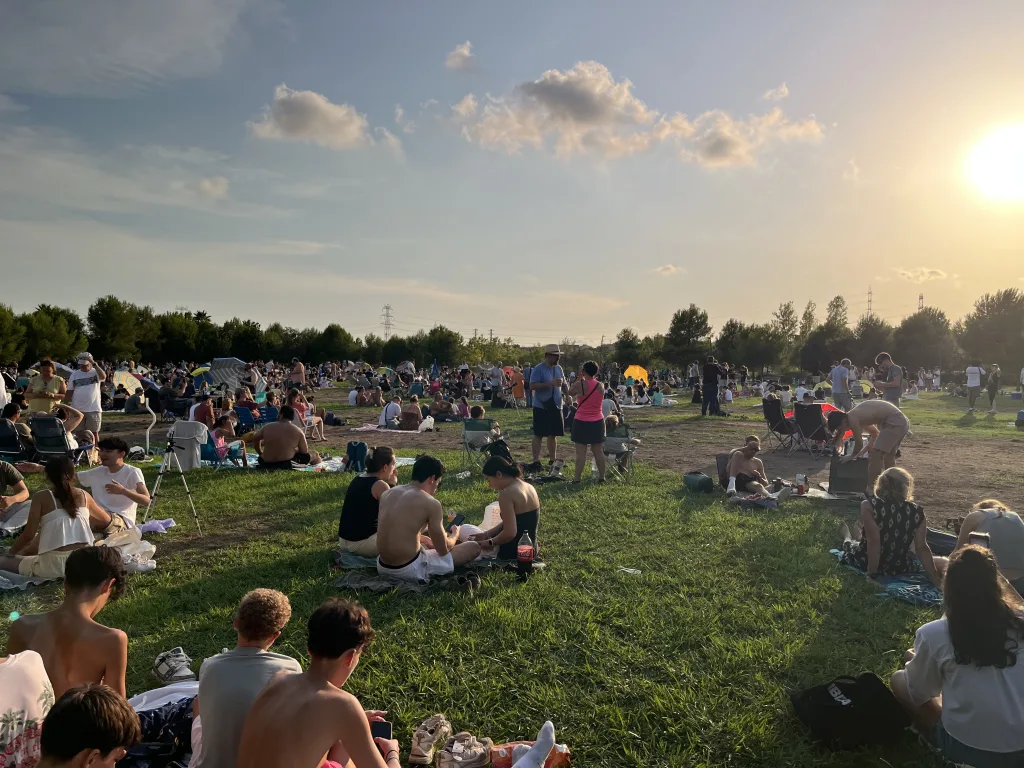
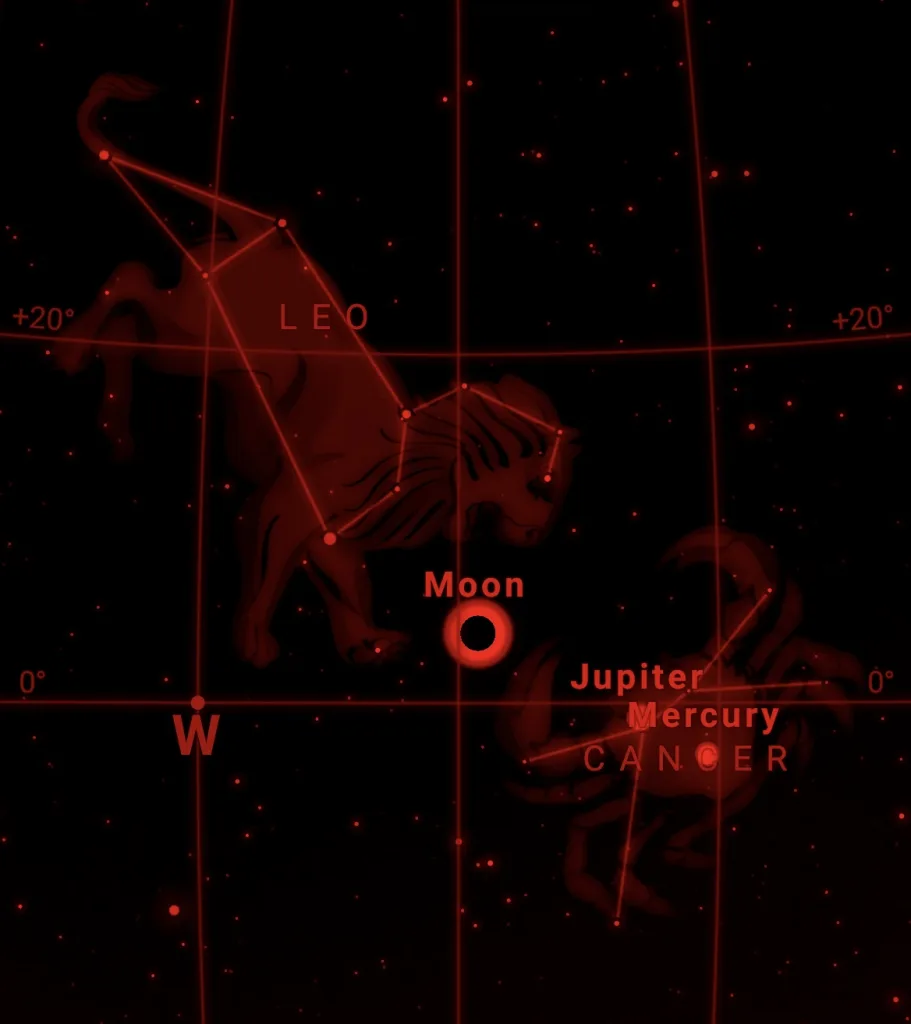
The Moon slowly covered the Sun, right between the constellations of Leo and Cancer. The other planets happened to be aligned for the occasion. The Sun’s corona would become visible around 8:30 PM on that hot August day of Spanish summer. The crowd baked under the Sun, yearning for water and for the eclipse, afraid to move and lose their spot to the Sun. The clock ticks on, people rise in hopes of standing closer to the two celestial bodies that seemed to collide in the sky. At 8:26 PM someone shouts: “La corona!”. And the crowd stirs and applauds. Through my glasses, the Sun was no longer visible at all, but through my phone’s camera you could see the Sun covered and crowned by a yellow light. That’s when my husband asked me to take off the glasses, and from that moment on, I was never the same again.
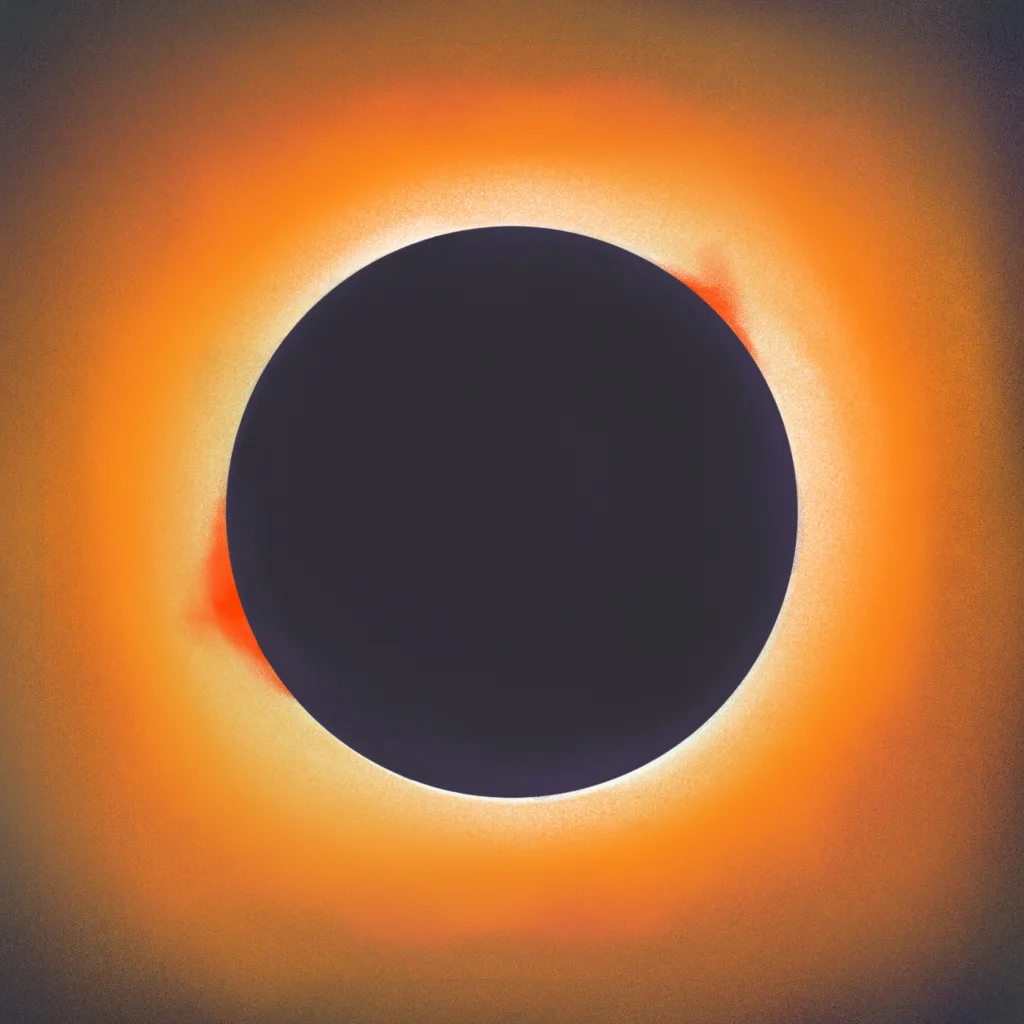
The Sun was a point of darkness in the sky. The atmosphere still reflected the light, making it look like twilight in every direction. Bats flew over the crowd, who gazed at the phenomenon with mouths open, shouting in wonder and euphoria. When I looked directly at the eclipse, my body was seized by the same cosmic energy that stirred the crowd and the other animals. The Moon, perfectly aligned with the king star, was dark, but colored in violet, purple, and deep blue tones. The Sun’s corona radiated yellows, greens, splashed with an intense neon orange. I lost my breath, feeling a mix of joy, ecstasy, and humility at realizing I could never have imagined an eclipse so colorful, and at feeling so small before what I was seeing.
I finally understood what Sagan meant by “we are made of star-stuff.” I hugged my husband, crying and grateful to share that time and space with him. I wanted that moment to never end, but the Moon followed its course, returning twilight to the inhabitants of Earth. I couldn’t take my eyes off the eclipse coming undone, running the risk of burning my retinas, convincing myself it was for a good reason.
Searching for eclipse photos that would let me relive those colors, I discovered that the neon orange splashes were, in fact, relatively cold plasma prominences, sustained by magnetic fields on the edge of the solar disc. I was in disbelief to find out that one of those splashes was actually much larger than the planet we call home. It was the first time I saw a total eclipse, saw colors I could never have imagined, and saw the Universe in perspective. Luckily, my eyes are just as they’ve always been, but I am no longer the same.